
Sweden Renews Internal Border Controls Until 11 May 2027
The government says police checks will continue from 12 November to 11 May, citing the threat from hostile actors and the security impact of Russia’s war in Ukraine.
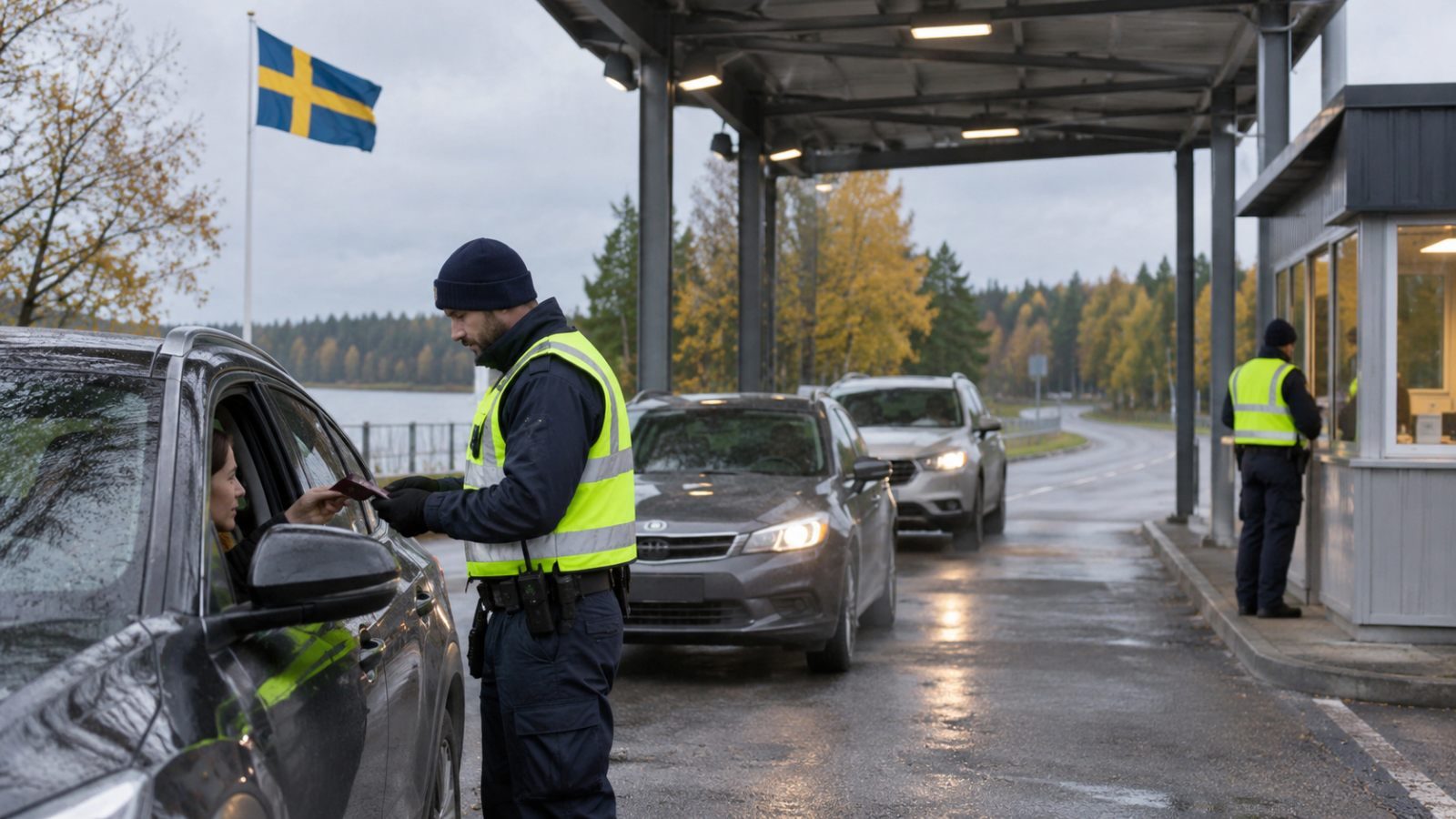
Sweden will maintain temporary checks at its internal Schengen borders from 12 November 2026 until 11 May 2027, according to a government decision published on Thursday.
The decision announced on 5 November takes effect on 12 November 2026 and runs until 11 May 2027. Police will determine where checks take place and how they are conducted. The measure applies within the Schengen area, whose members normally allow travel across internal borders without routine passport controls.
Sweden said its assessment was shaped principally by the security situation following Russia's full-scale invasion of Ukraine, including the movement of hostile actors and hybrid threats within Europe.
What changes for travellers?
The announcement is an extension of an existing system, rather than the creation of an entirely new external border. Travellers may still be required to show identity or travel documents when crossing into Sweden, including at selected airports, ferry terminals or land crossings.
The government's English-language crisis information service said the police are responsible for checking that people entering the country have the right to stay and possess valid identification and travel documents.
The decision does not amount to a ban on entry for all travellers, nor does it mean checks must take place at every crossing. Their location and intensity will depend on police assessments.
What the six-month period means
The specified dates matter because the existing authorisation runs out on 11 November and the new period begins the following day. Sweden is using a temporary control mechanism permitted by Schengen rules, not announcing that ordinary cross-border travel will cease. The European Commission publishes notifications of such measures, but the Swedish police decide the practical frequency and locations of checks.
Security exception within Schengen
The Schengen system allows temporary internal border controls under specified circumstances where a member state considers them necessary to address a serious threat. Sweden is not alone in using the provision: several other European countries have notified controls for security reasons.
The European Commission maintains a public register of the notifications and their duration. Such measures are meant to operate within EU rules, rather than replacing the general principle of free movement.
The Swedish government said border checks were one of several tools needed to identify people who might pose a security risk. It did not announce a specific incident on Thursday that triggered the extension.
For people making journeys after 12 November, carrying the normal travel documents and allowing additional time at major crossings is prudent. The new end date is 11 May 2027 unless the government subsequently announces another decision.
Reporting sources
- Swedish government – 5 November decision
- European Commission – temporary border controls
- Reuters – Sweden border decision
Sources

Musa Ersoy
Musa Ersoy is an editor and writer at DEFUXA Global News, covering developments in the United Kingdom and around the world. He researches news stories using official statements, credible sources and independently verifiable information. His editorial work focuses on factual ac…
Author profile and articles