
South Korea Seeks Approval for Wider Naval Patrols Near Hormuz
Seoul wants to extend the mandate of its Cheonghae naval unit and add maritime surveillance assets, while insisting the mission is not an entry into the Iran war.
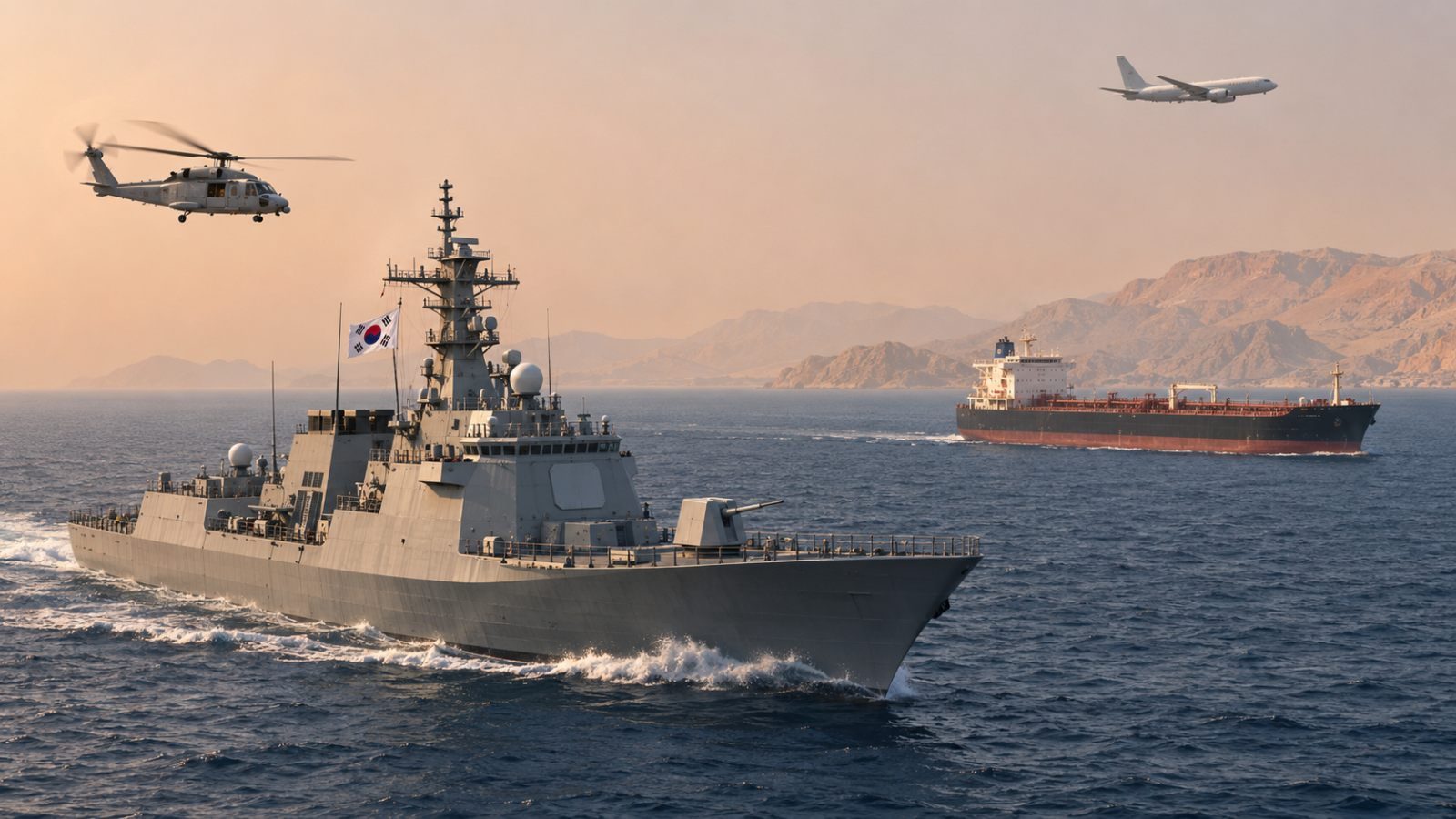
South Korea plans to ask lawmakers to authorise a wider operating area for its Cheonghae anti-piracy unit, moving surveillance and maritime-security work closer to the Strait of Hormuz without announcing participation in combat operations.
The Defence Ministry confirmed on Thursday that it would seek approval to expand the Cheonghae unit's mission from the Gulf of Aden towards waters south of Oman. The proposal also involves a P-8A maritime patrol aircraft and an increase of 75 personnel, according to South Korean officials.
The plan has not yet received parliamentary approval. It will be submitted after the government completes its cabinet process, and possible mine-clearance work has not been authorised as part of an active combat mission.
A broader area, not a combat mission
The Cheonghae unit has operated off Somalia since 2009 to help safeguard commercial vessels. Its current contingent includes a destroyer, a helicopter and support craft. Extending the mission towards the Arabian Sea would expand the area in which the unit can assist maritime security operations.
Officials say the revised mandate is intended to protect South Korean citizens and trade, not to place the country in the fighting between the United States and Iran. They have described the planned activities as non-combat and under South Korean command.
The proposed operating zone is near Oman's port of Duqm, some distance from the Strait of Hormuz itself. This geographical distinction is significant: a larger patrol area does not mean Seoul has authorised warships to enter the contested waterway or participate in attacks.
Why the proposed location matters
The waters near Oman’s port of Duqm are not the same as the Strait of Hormuz. Reuters reported that the prospective expansion would reach a zone roughly 650 kilometres from the strait. Calling this an existing deployment inside Hormuz would therefore misstate both the geography and the authorisation process. Adding a P-8A surveillance aircraft and 75 personnel remains part of a proposed mandate, not a completed operation.
Why South Korea is involved
South Korea relies heavily on imported energy. Government figures cited by Reuters indicate that around 70% of the country's oil imports in 2025 came from the Middle East, much of it travelling through Hormuz.
Disruptions to commercial shipping can therefore affect fuel costs and industrial supply chains far from the conflict. Seoul has been weighing how to support maritime navigation without becoming an active party to the war.
The proposed expansion would add surveillance capacity and equipment specialists. Officials have also discussed mine-clearance technologies for a later stage, when the security situation permits such operations.
The next significant step is the National Assembly's consideration of the revised deployment mandate. Until lawmakers approve it, the plan remains a government proposal rather than a completed deployment.
Reporting sources
- Reuters – South Korea patrol proposal
- Yonhap – defence and parliamentary plans
- Channel News Asia – policy background
Sources

Musa Ersoy
Musa Ersoy is an editor and writer at DEFUXA Global News, covering developments in the United Kingdom and around the world. He researches news stories using official statements, credible sources and independently verifiable information. His editorial work focuses on factual ac…
Author profile and articles