
French Unions and Students Stage Nationwide Strike Over Pay and Schools
Workers and students joined marches across France, with disruption reported at schools and transport services amid wider discontent over living costs.
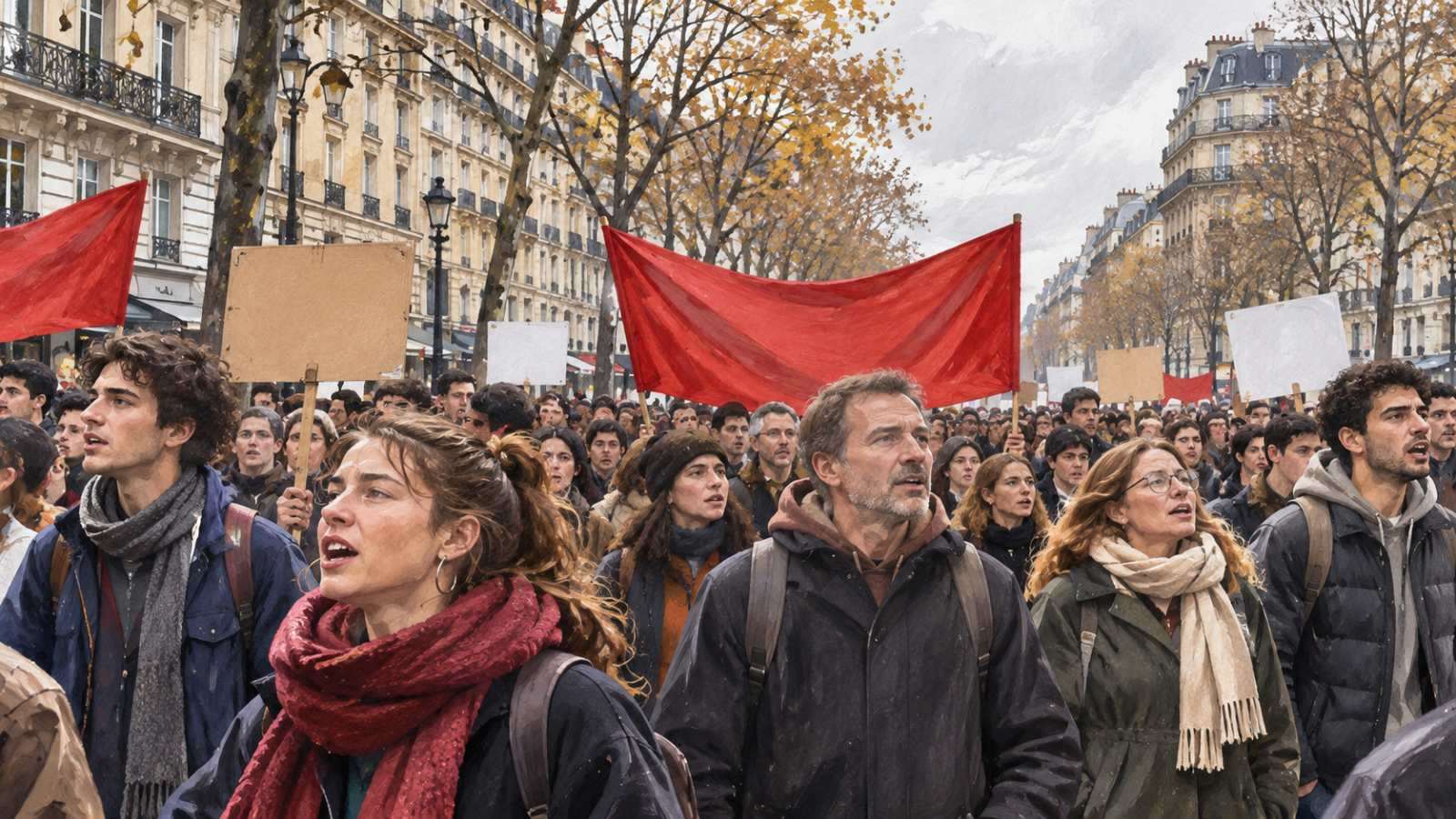
Workers, trade unions and students joined demonstrations across France on Thursday, 5 November, pressing for higher pay and better conditions in schools as the government prepared a substantial police presence.
The mobilisation brought together trade unions, school pupils and other protesters after weeks of unrest. Organisers sought stronger wage agreements and support for public services, while authorities prepared a large security operation in cities across the country.
The French Interior Ministry said more than 220 public demonstrations were expected and that roughly 70,000 police officers and gendarmes would be mobilised to maintain order. It said organisers and local authorities had discussed routes designed to avoid sensitive locations and reduce the risk of disorder.
Schools, streets and transport affected
Some secondary schools experienced closures or disruption, and parts of the transport network were affected as workers joined the action. The extent of disruption varied by city and service; the strike did not mean that all trains or all schools nationwide were closed.
Trade unions say wages have not kept pace with household costs, with energy bills and other essentials putting pressure on budgets. Students have also raised concerns about staffing and conditions in schools. The two movements increasingly overlap, although their priorities are not identical.
Demonstrations were held across the country, including in Marseille and Lyon, with an event planned in Paris. Reports described largely peaceful gatherings alongside isolated confrontations in some places. The distinction matters in a country where violent incidents during earlier protests have received extensive attention.
What the crowd figures actually measure
The Interior Ministry’s announcement said more than 220 public events were expected and 70,000 police and gendarmes would be deployed. These are planning and deployment figures, not the number of people taking part in the marches. Attendance estimates from unions and officials may differ and should be attributed with their reporting time.
Separate school and transport disruption reports also need to be read locally: a disrupted school, station or service does not imply that all facilities nationwide were closed.
Dispute over how to respond
France's government has argued that public finances constrain the scope for additional spending. Unions reject the idea that the burden of adjustment should fall on wages and services, and are demanding negotiations that produce measurable changes.
The national action follows a series of student-led demonstrations that developed into broader protests during the autumn. Union leaders have discussed further mobilisation, but a timetable for any additional national strike had not been settled when Thursday's action began.
Participation figures changed as marches developed throughout the day, and organisers and authorities have used different methods to count crowds. Rather than present an early estimate as a final total, the scale of the demonstrations will need to be assessed after reporting from the major cities is complete.
For businesses, commuters and families, the immediate consequences were service disruption and uncertainty about next steps in the dispute. For the government and the unions, the larger question is whether negotiations can address the grievances driving people back onto the streets.
Reporting sources
- French Interior Ministry – security arrangements
- Al Jazeera – protests and strike coverage
- ABC News – protests across France
Sources

Musa Ersoy
Musa Ersoy is an editor and writer at DEFUXA Global News, covering developments in the United Kingdom and around the world. He researches news stories using official statements, credible sources and independently verifiable information. His editorial work focuses on factual ac…
Author profile and articles