
Kenyan Court Sentences Paul Mackenzie to 200 Years in Shakahola Murder Case
Paul Mackenzie received two consecutive 100-year terms over the murders of 190 children and one adult. Separate Shakahola investigations involve further victims.
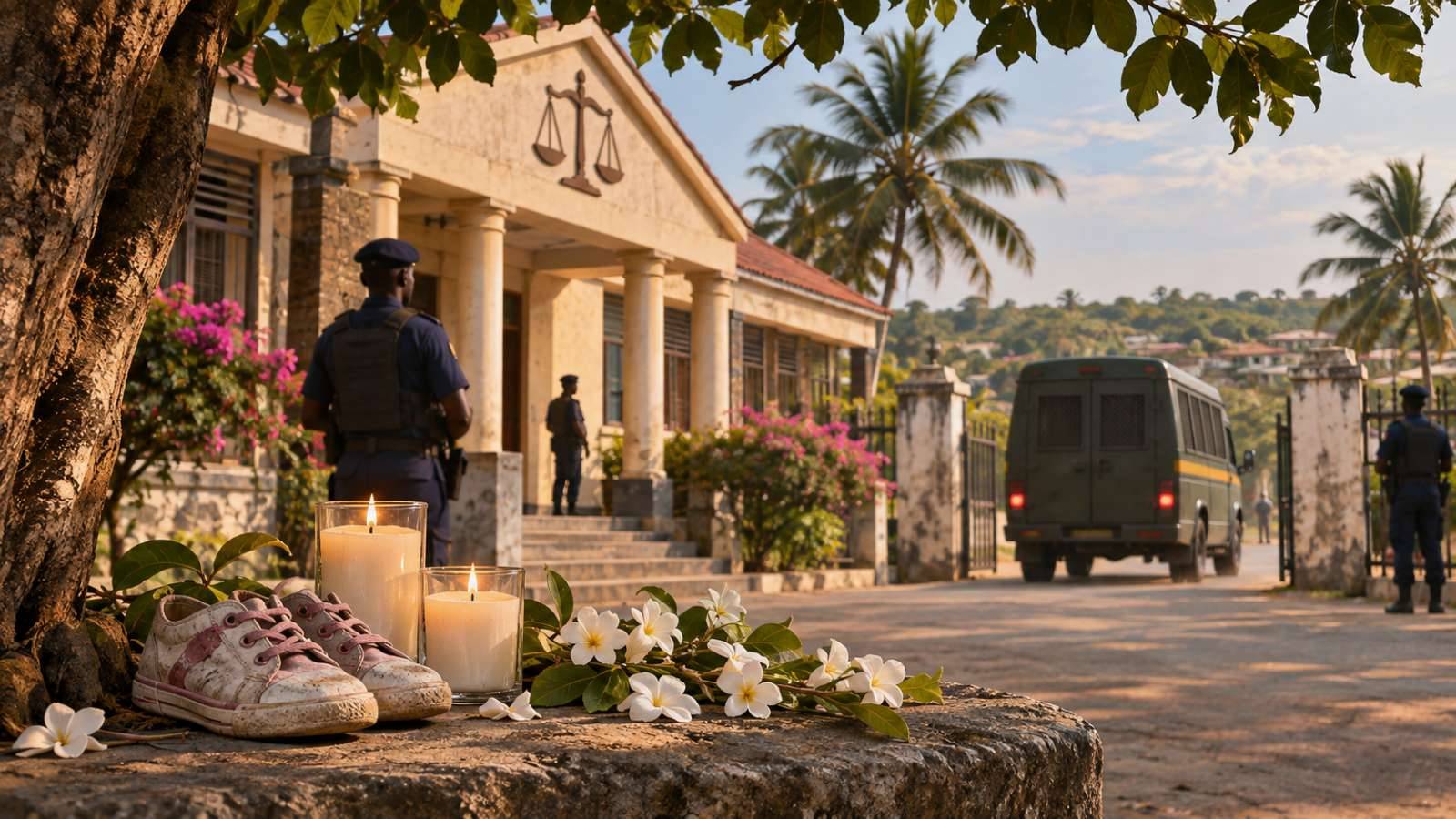
A Kenyan court sentenced former preacher Paul Mackenzie to 200 years in prison on Friday for the murders of 190 children and one adult in the Shakahola starvation case, a judgement that follows years of investigations into deaths at a remote religious settlement.
Justice Diana Kavedza handed down two consecutive 100-year terms. The court had convicted Mackenzie and 28 other defendants in October. Mackenzie's lawyer said he would appeal, meaning Friday's sentencing is not necessarily the end of the legal proceedings.
The case has become a test of how Kenyan institutions responded to repeated warnings about an isolated community whose members were encouraged to stop eating. It also raises difficult questions about responsibility for children who could not make such choices for themselves.
Reuters reported that the Kenya National Commission on Human Rights put the number of bodies recovered in Shakahola Forest at 448. That recovery figure is different from the number of victims included in this sentencing, and further proceedings must be reported on their own terms.
What the 191 convictions cover
Police began recovering bodies from shallow graves in the Shakahola area of Kilifi County in 2023. Investigators subsequently uncovered hundreds of bodies, making the inquiry far larger than the 191 deaths addressed in Friday's ruling. Authorities have pursued other investigations connected to the wider tragedy.
Prosecutors said Mackenzie directed followers to fast and that people who attempted to break the restrictions were prevented from obtaining food or leaving. The court accepted the prosecution's case, while Mackenzie disputed allegations that he compelled members of his group to starve.
The 28 co-defendants received varying sentences. Their individual roles and penalties were not identical, and the case should not be read as a single verdict covering every death recovered at the site.
What happens beyond the sentence
The investigations have exposed the challenge of intervening when claims of religious freedom intersect with evidence of coercion, neglect and serious harm. Critics have asked why warning signs did not lead to earlier action. Kenya has debated tighter oversight of religious organisations, although proposals and enacted rules must be distinguished.
For relatives, the sentencing brings an answer from the courts but does not settle the uncertainty surrounding every missing person or the identification of all remains. The wider Shakahola inquiry continues to have legal and humanitarian consequences.
The 200-year sentence announced on 6 November covers 191 victims in this case. It is not a judgement on every death investigated in connection with Shakahola.
Sources and verification
- Reuters – court ruling
- Local 10 / AP – independent agency reporting
- Anadolu Agency – court report
- Al Jazeera / Reuters – additional context
Sources

Musa Ersoy
Musa Ersoy is an editor and writer at DEFUXA Global News, covering developments in the United Kingdom and around the world. He researches news stories using official statements, credible sources and independently verifiable information. His editorial work focuses on factual ac…
Author profile and articles