
Activists Enter Amsterdam Data Centre Site Planned for Microsoft
Protesters entered a data centre construction site in Amsterdam’s Sloterdijk district on 6 November, prompting police action and renewed debate over its intended use.
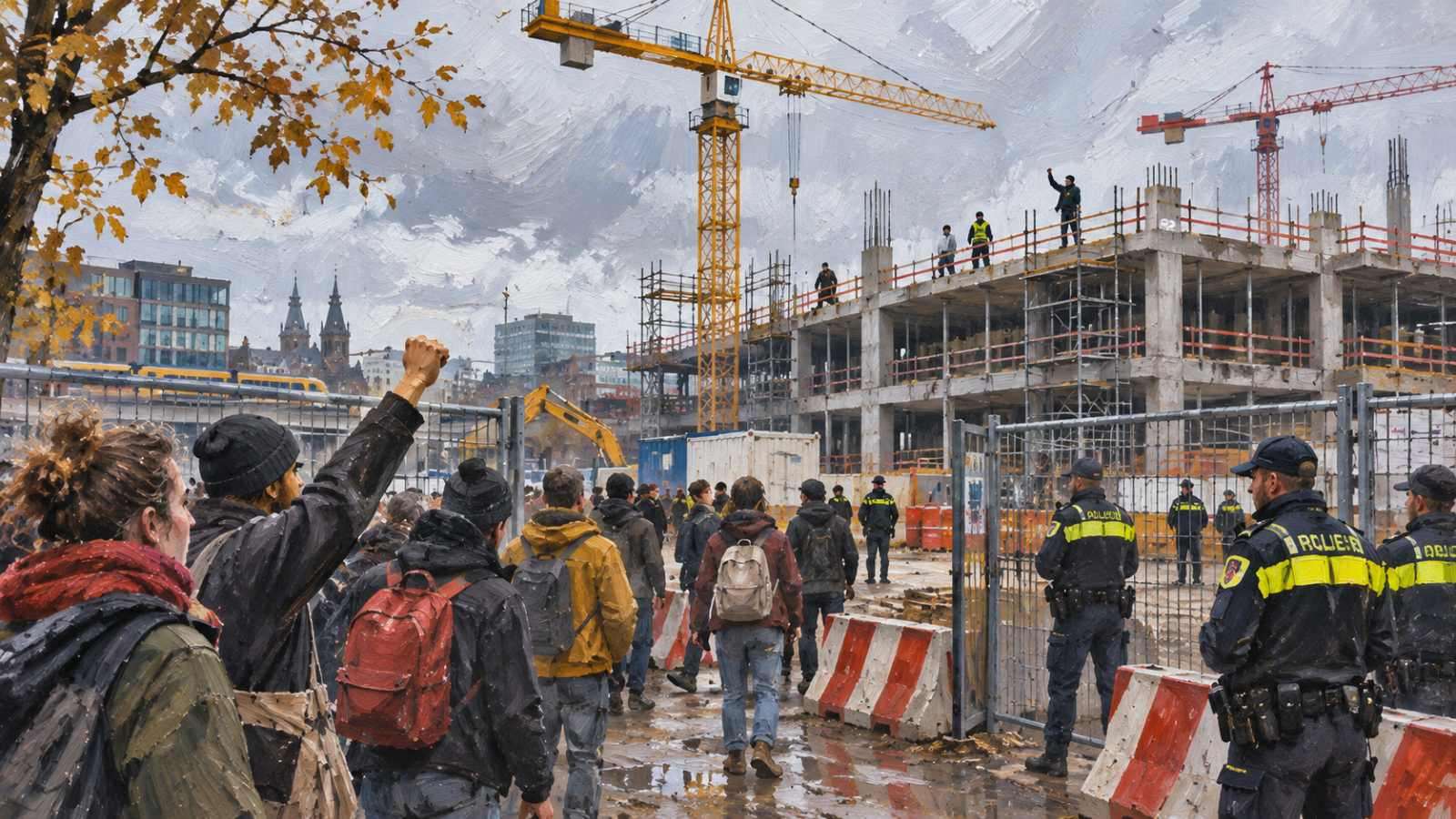
Activists climbed fences and entered a construction site for a Microsoft-linked data centre in Amsterdam on Friday, turning a dispute over artificial intelligence infrastructure into a direct confrontation with police.
Demonstrators moved onto the site in Sloterdijk, with some climbing a crane and displaying banners. Dutch broadcaster NOS reported that police began clearing the site after demonstrators climbed a crane and parts of the construction area. Arrest numbers were still subject to further confirmation.
Reuters said a witness saw around 100 protesters enter the site. Other accounts described separate groups gathered outside, so those numbers cannot reliably be combined into a single attendance figure.
NOS distinguished those who crossed the fence from protesters demonstrating outside, including campaigners objecting to the energy demands of data centres. Other participants also criticised Microsoft over its commercial links to military technology. These are the demonstrators’ positions, not verified findings about this particular site’s water use or electricity demand.
Two protests, overlapping concerns
Campaigners say the construction of very large data centres creates pressure on electricity grids, drinking-water supplies and land. Their concerns have grown alongside plans to expand facilities for cloud computing and AI services. Some protesters also objected to the ways technology platforms can be used in military and surveillance systems.
The planned facility is associated with Microsoft, while the site owner, Pure Data Centres, has a separate role in the project. That distinction matters when attributing responsibility for construction and any decisions about its operation.
Microsoft said it recognised the right to peaceful protest but did not support actions that broke the law or put people at risk. The site owner urged protesters to leave safely and offered to engage in dialogue, according to Reuters.
What remains unresolved
The Amsterdam protest formed part of a wider debate in Europe about the environmental and political consequences of new computing infrastructure. Supporters of new data centres argue that the region needs infrastructure to support AI services, businesses and digital independence. Opponents want more scrutiny of environmental costs and the effect on local communities before additional projects are approved.
Neither the protest nor the company's response resolves the underlying policy question: how much digital infrastructure should be built, where, and under which safeguards.
At the time of reporting, the number of arrests and the final outcome of the demonstration were still subject to updates. Claims about the site's future electricity or water consumption were made by campaigners and have not been independently established in this report.
Sources and verification
Sources

Musa Ersoy
Musa Ersoy is an editor and writer at DEFUXA Global News, covering developments in the United Kingdom and around the world. He researches news stories using official statements, credible sources and independently verifiable information. His editorial work focuses on factual ac…
Author profile and articles