
Fake Nuclear Warnings Sent After Ukraine and Russia Alert App Hacks
Residents received false radiation and chemical alerts as both countries reported attacks on public warning apps. The perpetrators and any link between the incidents remain unclear.
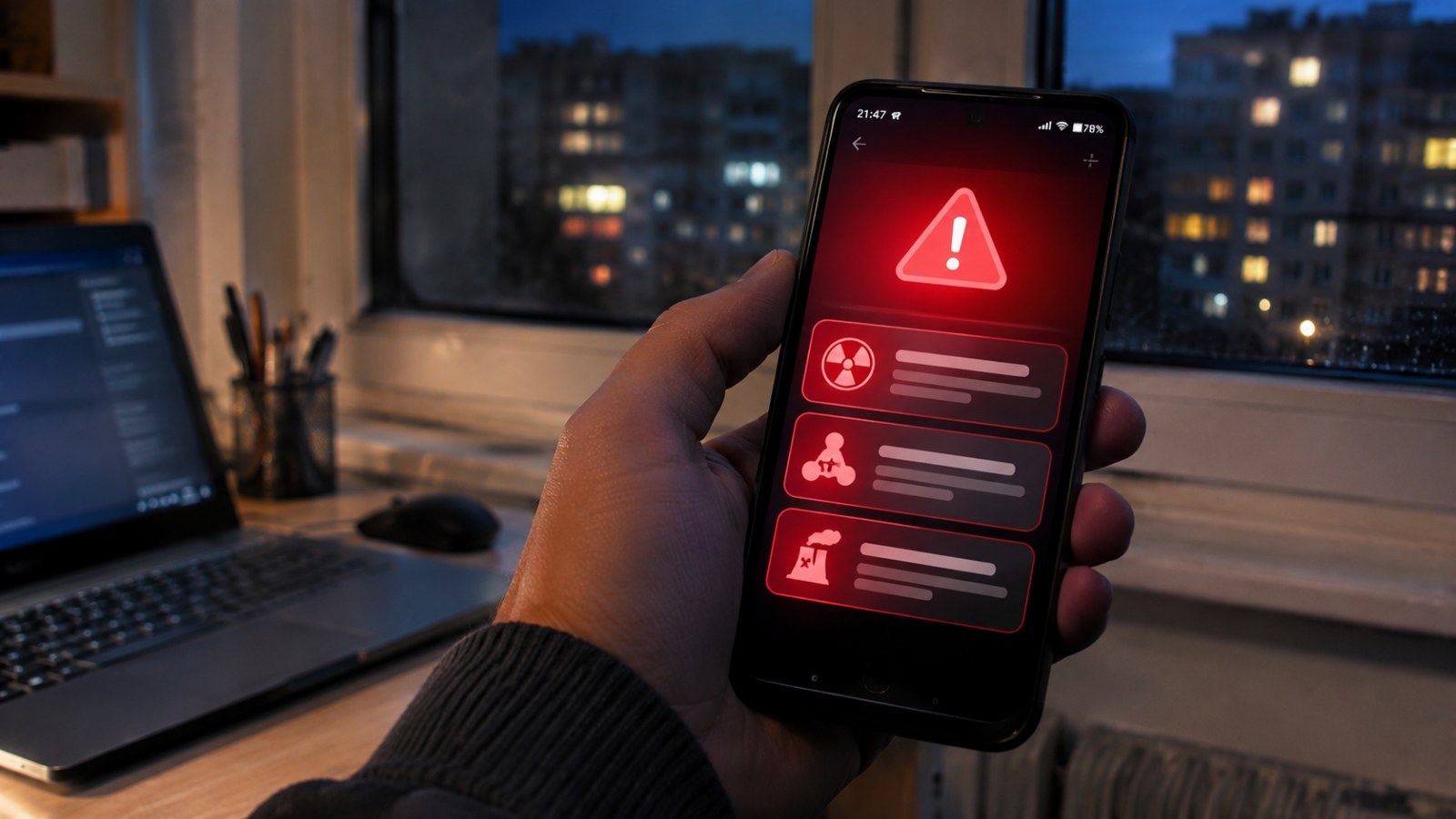
Emergency warning apps in Ukraine and Russia sent false alerts about nuclear and other threats after separate reported cyberattacks, leaving authorities to reassure people that the alarming messages were not genuine.
In Ukraine, notifications sent late on Sunday warned of radiation, a possible chemical attack and street fighting in Kyiv. One message referred to Russia's Oreshnik missile. Ukrainian officials quickly said the app had been interfered with and urged residents to follow verified emergency channels rather than information contained in the unusual notifications.
Hours later, Russia's emergencies ministry reported that its own mobile application had been compromised. Users in multiple regions received false messages, including claims about nuclear weapons. The ministry said its broader public warning arrangements remained operational.
A warning system becomes a source of alarm
The Ukrainian app is designed to deliver quick notifications of air attacks to people who may have only moments to take shelter. That makes the accuracy and credibility of each alert particularly important. When false warnings appear in the same channel as real ones, residents face a difficult choice between reacting immediately and seeking confirmation.
The Ukrainian authorities temporarily suspended the affected app and said it had been restored overnight. Other channels, including physical air-raid sirens and official updates, continued to operate, according to the authorities.
Neither government has established a verified link between the two app incidents. A hacking group reportedly claimed responsibility for the Ukrainian intrusion, but Associated Press said that claim could not be independently verified. Attribution is especially difficult when public statements emerge during an active war.
The incidents came during renewed tension
The false alerts were reported around the expiry of a limited humanitarian ceasefire in southern Ukraine's Kherson region. They did not by themselves establish that a new nuclear or chemical incident was taking place.
The episode exposes a practical vulnerability: emergency communication relies not only on technical availability but also on public confidence. A system can cause disruption even when no physical infrastructure has been destroyed.
For residents, officials advised checking verified emergency channels and avoiding links embedded in suspicious notifications. A compromised app should not be treated as proof of a nuclear or chemical incident, but genuine shelter instructions from trusted local systems still matter. Investigations into how the apps were accessed are continuing.
Sources and further reading: Associated Press · The Guardian · ABC News Australia.
Sources

Musa Ersoy
Musa Ersoy is an editor and writer at DEFUXA Global News, covering developments in the United Kingdom and around the world. He researches news stories using official statements, credible sources and independently verifiable information. His editorial work focuses on factual ac…
Author profile and articles