
Ukraine Police Bodycam Shows Shelter Strike in Komyshuvakha
Footage from a Ukrainian officer’s body camera shows residents seeking cover during the 2 November air strikes. Ukrainian officials reported 40 deaths by 4 November as searches continued.
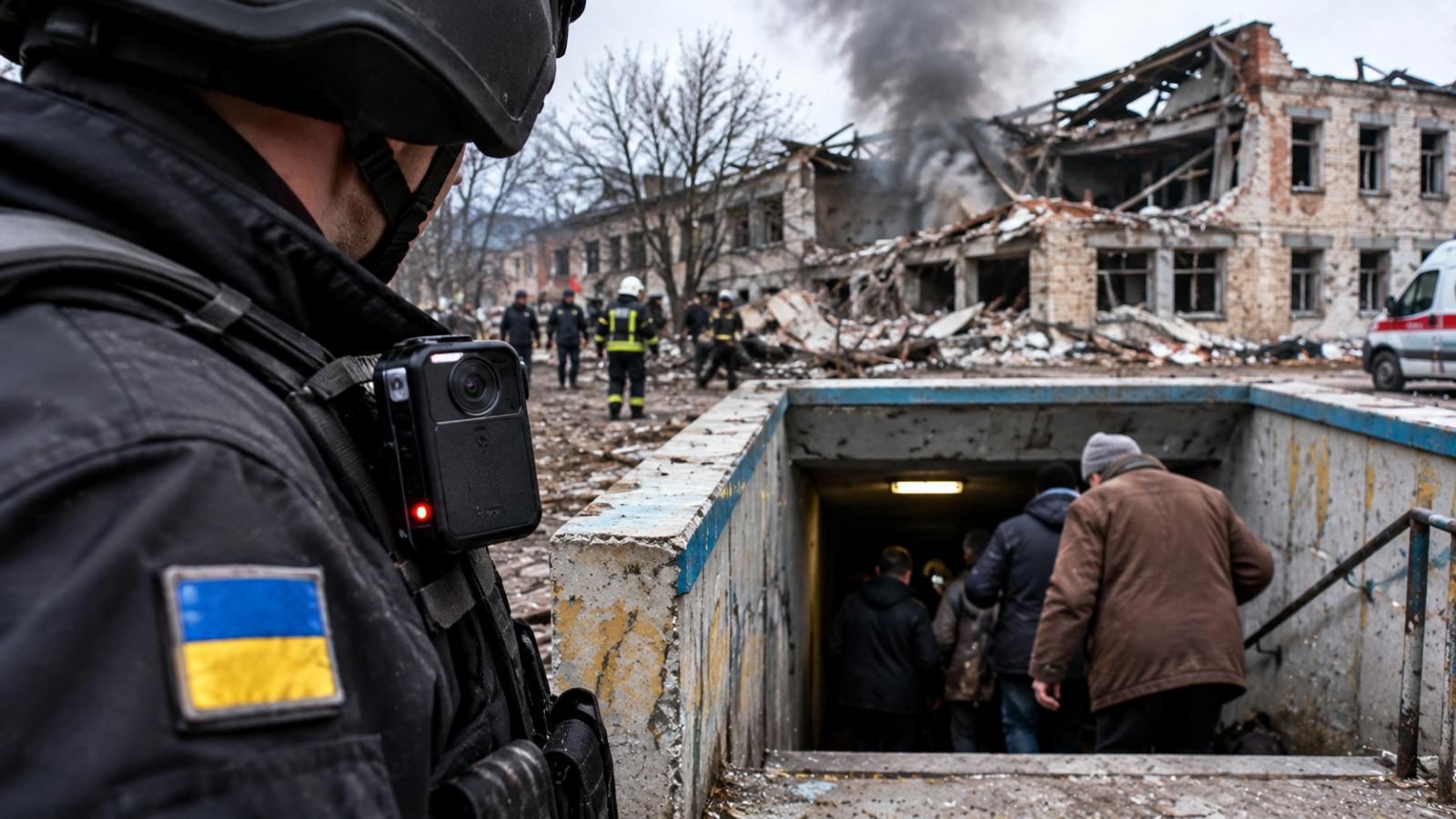
Footage from a Ukrainian police officer’s body camera shows residents moving into an underground shelter shortly before another explosion during Russian air strikes on the village of Komyshuvakha in south-eastern Ukraine. The recording, made on Monday, 2 November, was made public on Wednesday, 4 November, as rescue teams continued searching the damaged site.
The attack struck a former school and nearby shelter in the Zaporizhzhia region, where local residents had gathered for humanitarian assistance. Ukrainian officials reported 40 people killed by 4 November, according to Reuters and the Associated Press. The reported toll was still subject to revision while bodies were recovered and identified.
What the police recording shows
In the footage released by Ukraine’s police, people can be seen taking cover as officers guide them towards the shelter. A warning of incoming aerial bombs is heard before an explosion interrupts the recording. Reuters said it had verified the body-camera footage. The images capture a critical moment in the attack, but they do not independently establish the fate of every person shown or, on their own, determine the intended target.
The recording was recovered from a police officer killed in the attack, the Associated Press reported. Ukrainian authorities said four police officers and two rescue workers died while responding to the strikes. Their deaths form part of the reported overall toll, not a separate figure to add to it.
Ukrainian police identified a FAB-3000, a heavy Russian aerial bomb, as one of the weapons used. This identification is attributed to the police; it has not been independently established from the recording alone.
Why civilians had gathered at the school
The former school was being used to distribute humanitarian aid and provide shelter, rather than to hold classes. According to the UN Human Rights Monitoring Mission in Ukraine, the local aid distribution had been announced publicly the previous day, with residents told to attend between 10am and noon on 2 November.
UN monitors said several glide bombs hit the site as civilians gathered. They reviewed photographs and videos of the aftermath and found damage consistent with powerful aerial bombs. Their statement, issued on 3 November, said local authorities had reported at least 31 civilian deaths by that evening; the mission was still verifying the exact number.
That earlier civilian figure should not be confused with the 40 deaths reported on 4 November by Ukrainian officials. The two figures describe different reporting times and categories, and neither represents a final independently verified count of every person killed.
A separate United Nations humanitarian statement condemned attacks that killed civilians and first responders at the relief distribution site.
The search and the missing-person figures
Rescue operations continued for a third day on Wednesday, despite what Ukrainian officials described as further drone activity near the area. Some bodies could not immediately be identified, and investigators were collecting DNA samples from relatives, according to local police reporting carried by Ukrinform.
Reuters reported that regional official Ivan Fedorov had listed 59 people as missing. The Associated Press separately reported President Volodymyr Zelenskyy’s estimate that about 30 people might still be under the rubble. These are not interchangeable numbers: a missing-person register can include people later identified among the dead, while the rubble estimate concerns those feared trapped at the site. The figures had not been reconciled at the time of reporting.
Russia’s Defence Ministry said its forces had targeted Ukrainian military units in the area and claimed military casualties. That account differs from Ukrainian officials’ description of an attack on a public aid distribution site and the UN’s findings about civilians gathering there. The military claim has not been independently substantiated by the footage.
What the UN says about civilian protection
The UN mission said the widely publicised timing and location of the aid distribution raised serious questions about precautions taken before the strikes. It highlighted international humanitarian law’s requirements to distinguish civilians from military targets and take feasible steps to reduce civilian harm. A definitive legal finding about responsibility for this particular attack would require a fuller investigation.
The footage offers a direct view of civilians and emergency personnel trying to find safety. It does not resolve the outstanding questions about the full casualty toll. As of 4 November 2026, searches and identification work were continuing, and the numbers were liable to change.
Sources

Musa Ersoy
Musa Ersoy is an editor and writer at DEFUXA Global News, covering developments in the United Kingdom and around the world. He researches news stories using official statements, credible sources and independently verifiable information. His editorial work focuses on factual ac…
Author profile and articles