
Japan Opens National Disaster Agency to Prepare for Major Earthquakes
Japan launched a national disaster management agency under the prime minister, with Minister Goshi Hosono directing preparations and regional hubs planned for 2028.
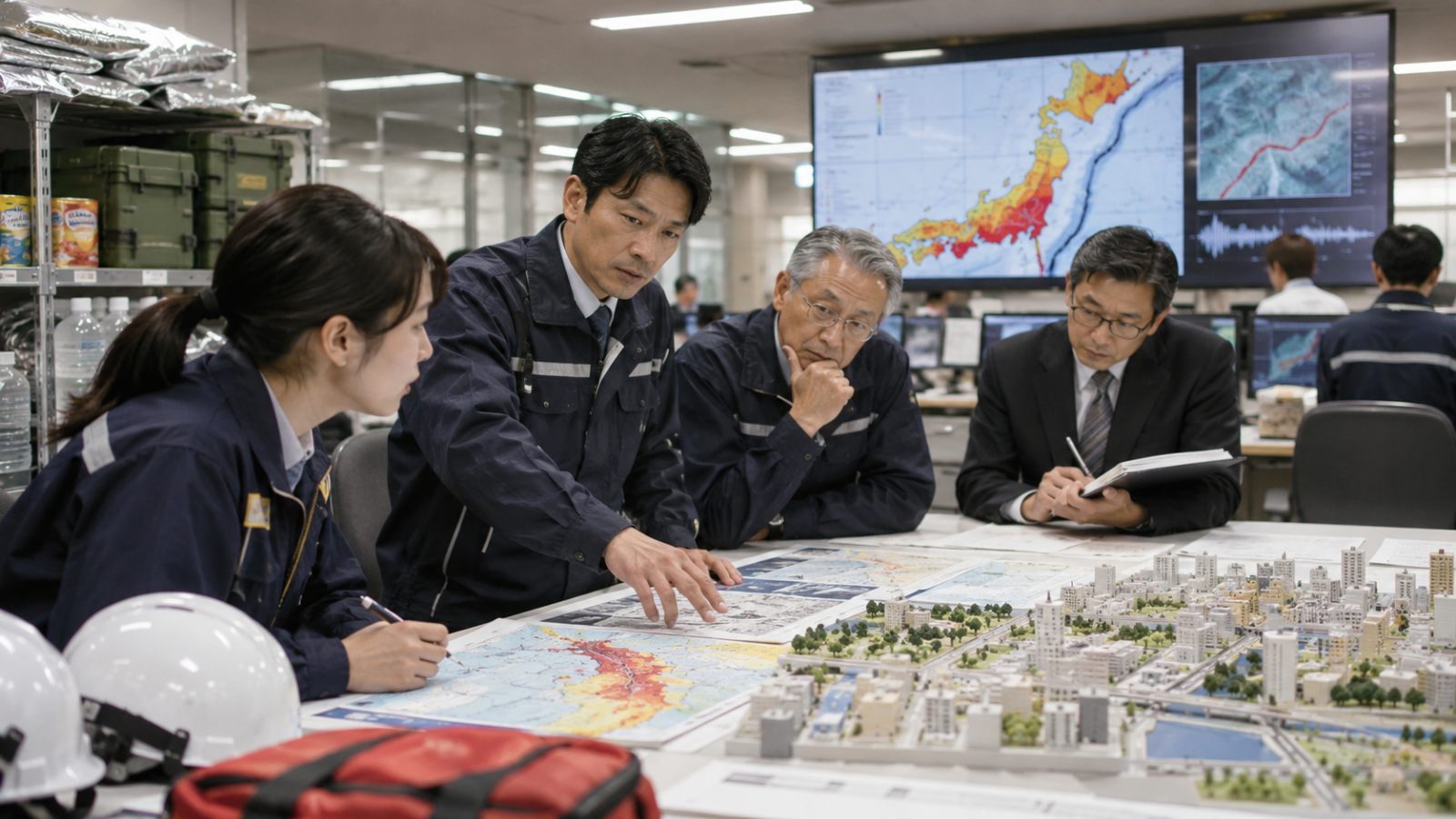
Japan has launched a national agency to bring disaster planning and emergency response under closer central coordination, a step intended to improve preparations for earthquakes, flooding and volcanic eruptions.
The National Disaster Management Agency began operating on Monday, 2 November. Prime Minister Sanae Takaichi heads the new agency, with Reconstruction Minister Goshi Hosono serving concurrently as disaster management minister and directing its work. Hosono urged residents to prepare at home rather than rely solely on emergency services after a major disaster.
The announcement comes as Japan assesses the consequences of potential earthquakes along the Nankai Trough and other fault zones, as well as increasingly disruptive floods and storms.
Coordinating before an emergency
A major earthquake can affect roads, hospitals, water supplies and communications at the same time. Local governments may be among the institutions hit hardest, particularly in smaller communities with limited staff and budgets.
The new agency is designed to help organise cooperation among ministries and municipal authorities before such an event occurs. Planned regional hubs should support local response and reconstruction work, although the sites have not yet been selected and the hubs are not expected to begin operating immediately.
According to reporting by Kyodo, locations are due to be chosen by summer 2027, with the regional hubs scheduled to open by July 2028. Those dates are targets, not evidence that a full nationwide network is already in place.
The agency has 352 staff, according to Jiji Press reporting carried by The Japan Times. Alongside emergency coordination, it is tasked with improving shelter conditions, organising essential supplies and reducing deaths linked to hardship after disasters.
A message for households
At the launch, Hosono encouraged people to secure heavy furniture and keep sufficient food and drinking water for several days. The guidance reported by The Japan Times recommended at least three days of supplies, with a week preferable where possible.
Residents were also urged to know their evacuation routes and the location of the nearest shelter. Such steps can be particularly important when electricity or mobile networks are disrupted.
Japan has extensive experience of disaster response, but establishing a new institution is only the start of the process. Its value will depend on whether national plans translate into faster communication, well-stocked shelters and effective support for communities facing an emergency.
Sources and further reading: Anadolu Agency · The Japan Times / Jiji Press · Bernama / Kyodo.
Sources

Musa Ersoy
Musa Ersoy is an editor and writer at DEFUXA Global News, covering developments in the United Kingdom and around the world. He researches news stories using official statements, credible sources and independently verifiable information. His editorial work focuses on factual ac…
Author profile and articles