
Bank of England Raises Bank Rate to 4% as Energy Costs Climb
The Bank of England has increased borrowing costs by a quarter of a percentage point, warning that a prolonged energy shock is pushing up its inflation forecasts.
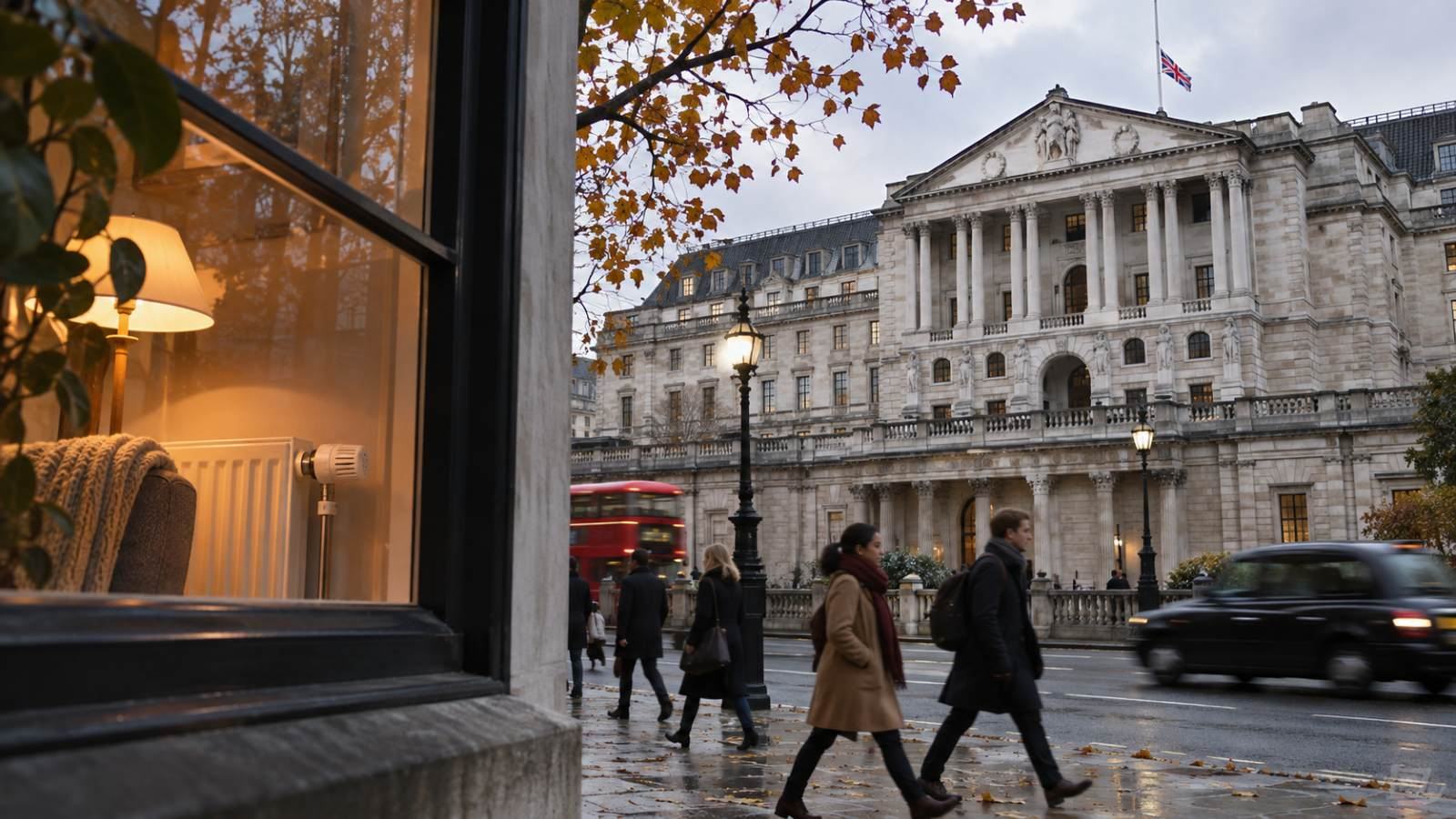
The Bank of England has increased its benchmark interest rate to 4%, responding to a renewed inflation threat as higher energy prices feed into the UK economy.
The Monetary Policy Committee voted eight to one to increase Bank Rate by 0.25 percentage points at its meeting ending on 4 November. Its decision was published on Thursday, 5 November. The ninth member, Catherine L Mann, favoured a larger half-point increase, which would have taken the rate to 4.25%.
The decision makes borrowing more expensive for some households and businesses, although the effect on an individual mortgage will depend on the type of agreement and when it resets. Savings rates may also respond, but banks are not required to pass on the entire increase to customers.
Why the Bank acted now
The Bank said annual UK consumer price inflation reached 3.5% in September, above its 2% target. It now expects inflation to rise to around 5% by the middle of 2027 before falling back as higher energy prices work their way through the annual comparison.
Higher oil and gas costs have already fed into transport and household bills. Policymakers are concerned that businesses could eventually raise other prices to recover their costs, while employees may seek higher pay to protect their incomes. The Bank said evidence of those wider effects remains limited, but the risk has increased.
Recent activity and employment figures have also proved somewhat more resilient than previously expected, reducing the case for keeping rates unchanged.
How a quarter-point rise reaches households
An increase in Bank Rate does not automatically raise every mortgage payment overnight. Borrowers on variable-rate products may see changes sooner, while those with fixed-rate agreements generally face a new price when they refinance. The timing and size of any change depend on the lender and contract. For savers, an increase in Bank Rate is not a promise that every bank will raise deposit rates by the same amount.
The central bank’s November Monetary Policy Report sets out the economic forecasts behind the decision; the forecast for inflation around 5% in mid-2027 is a projection, not an observed figure.
What happens next
The committee was not unanimous about the pace of tightening, and it did not commit to another increase. Its written guidance says future decisions will depend on new evidence about wages, company pricing and the duration of energy disruption.
That distinction matters to borrowers considering whether to fix a rate and to businesses planning investment. A quarter-point rise today is a confirmed policy change; any further rise remains uncertain.
The Bank's next scheduled rate announcement is on 17 December. Until then, the main questions are how long energy costs remain elevated and whether those costs begin to influence a broader range of prices.
The decision was taken against a difficult trade-off: restraining inflation without unnecessarily weakening growth. The Bank argues that allowing persistent price increases to take hold would ultimately cause more harm to households and firms.
Reporting sources
- Bank of England – MPC decision, 5 November
- Bank of England – Monetary Policy Report
- Reuters – market reaction
Sources

Musa Ersoy
Musa Ersoy is an editor and writer at DEFUXA Global News, covering developments in the United Kingdom and around the world. He researches news stories using official statements, credible sources and independently verifiable information. His editorial work focuses on factual ac…
Author profile and articles